
Dog Training Certifications
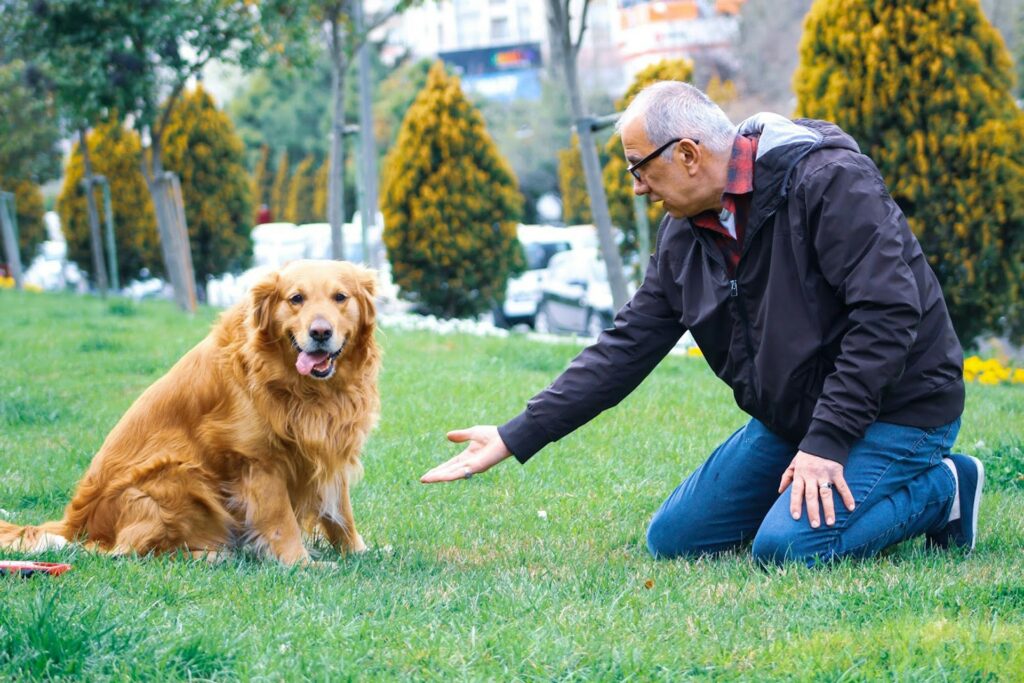
Although there is no standardized dog trainer qualification or licensing system for trainers, there are reputable organizations that certify that a trainer has undergone rigorous study and adheres to recognized, science-based principles of behavior.
What are Dog Trainer Certifications?
Holding a certification from one of these organizations is a valuable indicator of a trainer’s commitment to professional growth and staying current with the latest developments in the field.
Below is a list of certifications you may see when searching on DigUp, and the requirements for trainers to earn them:
| Course name | Certifying body | Course length | Assessment format | Subjects studied |
| CPDT-KA (Certified Professional Dog Trainer—Knowledge Assessed) | Certification Council for Professional Dog Trainers (CCPDT) | Requires at least 300 hours of experience in the last three years. | Pass a 200-question exam. | Ethology, learning theory, dog training technique, and instruction. Compliance with LIMA (Least Invasive Minimally Aversive) is required. |
| CPDT-KSA (Certified Professional Dog Trainer—Knowledge and Skills Assessed) | Certification Council for Professional Dog Trainers (CCPDT) | Builds upon CPDT-KA; specific length not specified. | Submit video recordings of training sessions for evaluation by the CCPDT. Demonstrates knowledge from CPDT-KA and practical application of skills. | Demonstrates knowledge from CPDT-KA and practical application of skills. |
| CBCC-KA (Certified Behavior Consultant Canine—Knowledge Assessed) | Certification Council for Professional Dog Trainers (CCPDT) | Not specified. | Pass a standardized test. | Applied behavior analysis, consulting skills, best practices, ethology, body language, observational skills, health, development, life stages, anatomy, and physiology. |
| KPA-CTP (Karen Pryor Academy—Certified Training Partner) | Karen Pryor Academy | A six-month program. Includes ten hours of weekly online instruction and four weekends of in-person training. | Assesses both technical knowledge and hands-on training techniques. | Technical knowledge and hands-on training techniques, performed in compliance with ethical guidelines. |
| ABCDT (Animal Behavior College Dog Trainer) | Animal Behavior College | A combination of real-world and home study. | Combines real-world training with a mentor trainer and an online dog training course. | Provides an academic and functional foundation in dog training, including LIMA-compliant training techniques. |
| ACAAB (Associate Certified Applied Animal Behaviorist) | Animal Behavior Society (ABS) | Requires a master’s degree and a minimum of two years of professional experience in applied animal behavior. Recertification is required every five years. | Requires a master’s degree with a research-based thesis, minimum professional experience, three letters of recommendation, and a case study or research-based paper for recertification. Applicants must have presented at an ABS annual meeting within five years prior to applying. | Focus on applied animal behavior. Coursework must include 30 semester credits in behavioral science courses, including nine semester credits in ethology, animal behavior, and/or comparative psychology, and nine semester credits in animal learning, conditioning, and/or animal psychology. |
| CAAB (Certified Applied Animal Behaviorist) | Animal Behavior Society (ABS) | Requires a doctoral degree in a biological or behavioral science with an emphasis on animal behavior, including five years of professional experience, OR a doctorate in veterinary medicine plus two years in a university-approved residency and three additional years of professional experience in applied animal behavior. | Requires a doctoral degree with emphasis on animal behavior, professional experience, thorough knowledge of literature and scientific principles, original contributions/interpretations of animal behavior information, and significant experience working with a species. Endorsement requirements are identical to ACAAB, including three letters of recommendation. Applicants must have presented at an ABS annual meeting within 5 years prior to applying. | Same coursework requirements as ACAAB. Broad background in animal behavior theory and application, including principles of animal behavior, research methods, and dissemination of knowledge. |
| CDBC (Certified Dog Behavior Consultant) | International Association of Animal Behavior Consultants (IAABC) | Not specified. | Requires written case studies and responses to questions, and demonstration of competency in six core areas. Certification centers around the practical application of behavior change principles. | Assessment and intervention strategies, consulting skills, knowledge of animal behavior, and relevant species-specific knowledge of healthcare, husbandry, nutrition, and behavior. Follows LIMA (Least Intrusive Minimally Aversive) strategies. |
| FFCP (Fear-Free Certified Professional) | Fear Free, LLC | Online education course. | Online education program. | Skills to manage and handle dogs and cats with less apprehension during veterinary visits, procedures, and other care. Techniques can also be used at home to address behaviors that hinder pet owners from administering home care. |
| CSAT (Certified Separation Anxiety Trainer) | Malena DeMartini Separation Anxiety Training Certificate Program | A three-month program. | Requires completion of the program. | Focused on diagnosing and implementing strategies to manage separation anxiety. |
| CSAP-BC (Certified Separation Anxiety Pro™ Behavior Consultant) | Julie Naismith | The taught component lasts 9 weeks, with assessments taking up to six months to complete. | Requires passing three assessments: The Departure Plan-Building Assignment, a 35-question online test, and a Client Practical session with a real client. Emphasizes testing skills, not just knowledge. | Science, concepts, and methodology in managing fear and separation anxiety, as well as training in the context of different applications, including puppies and seniors. |
| FPPE (Family Paws Parent Educator) | Family Paws | A 13-week course. | Requires weekly virtual meetings, assignments, collaboration, participation in a private Facebook group, and commitment to professionalism and compassion. After completing the course, participants must take an exam to qualify. | Prepares individuals to help families create safer, lasting relationships between their children and dogs, including toddlers and newborns, by recommending practical management and training solutions for overwhelmed families. Emphasizes force-free methods and does not accept applications from those who use force, intimidation, or aversive tools. |
| CTC (Certificate in Training and Counseling) | The Academy for Dog Trainers | People move through different levels of the course at their own pace. | After graduating, students take a final exam. Progress through levels involves training practice (video), written assignments, and knowledge tests. | Covers how animals learn, how to change their behavior, and how to work with clients, including fearful and aggressive dogs. The curriculum also includes critical thinking skills, canine ethology, and various breeds of dogs. Emphasizes evidence-based curriculum, client counseling, and critical thinking skills. |
| CCDT (CATCH Certified Dog Trainer) | CATCH Canine Trainers Academy | Flexible, self-paced remote learning course. Includes 10 phases. Can consist of hands-on workshops. | Involves demonstrating hands-on training and teaching skills, and graduating from each phase, leading to final certification. | Offers a complete education based on the standards of the CCPDT and the position statements of the Association of Professional Dog Trainers (APDT). Covers puppy development and manners training, and behavior solutions. Includes topics like fear, aggression, and separation anxiety. Promotes positive reinforcement methods without aversives. |
| SFTD-CPT (School for the Dogs Certified Professional Trainer) | School for the Dogs | An intensive 6-month virtual program. Suggested minimum of ten hours a week for coursework and hands-on work with a dog. | Involves hands-on assignments, quizzes, and a final exam encompassing both theory and practical skills. | Covers understanding canine behavior, client communication, and urban dog training, including leash reactivity, socialization, and environmental stressors. Emphasizes a holistic, science-backed approach including canine psychology. |
| PMCT (Pat Miller Certified Trainer) | Peaceable Paws Academy | A 6-day intensive academy. This academy is the first step toward Pat Miller Trainer Certification. | The PPA expects students to read several books in advance and prepare for discussion about and testing on the concepts. Students are assigned to work with a shelter dog. Eligibility to become PMCT and higher levels (PMCT-2 and PMCT-3) depends on grades. | A college-level course exploring behavior science and the hands-on application of force-free dog training methods. Graduates gain a thorough understanding of how dogs think and learn, as well as hands-on experience training shelter dogs. The academy emphasizes fear, pain, and intimidation-free training. |
| FDM (Family Dog Mediator) | Family Dog Mediation Education Center | Self-paced online modules (approx. 8–12 weeks) | Requires completion of course materials and quizzes. | Behavior frameworks, mediation between dogs and families, applied ethology, human–dog relationship dynamics, conflict prevention and resolution. |
| Certified Behavior Adjustment Training Instructor – Knowledge Assessed (СВАТІ-КА) | Grisha Stewart Academy | Self-paced program consisting of 31 modules and 100 hours of instruction | After completing course material, certificants must pass a 30 multiple choice question test and a written essay | In depth study of BAT (Behavioral Adjustment Training), a technique used for dog reactivity and other behavioral concerns |
| Certified Behavior Adjustment Training Instructor – Knowledge and Skills Assessed (СВАТІ-КSА) | Grisha Stewart Academy | Builds upon CBATI-KA. Participants complete theory courses and build a Practical Skills Asesssment portfolio | Completion of learning modules and submission of Practical Skills Assessment portfolio | In depth skills assesment of BAT (Behavioral Adjustment Training), a technique used for dog reactivity and other behavioral concerns |
To learn more about our methodology for recommending trainers, you can read more about our Standards for Trainers.